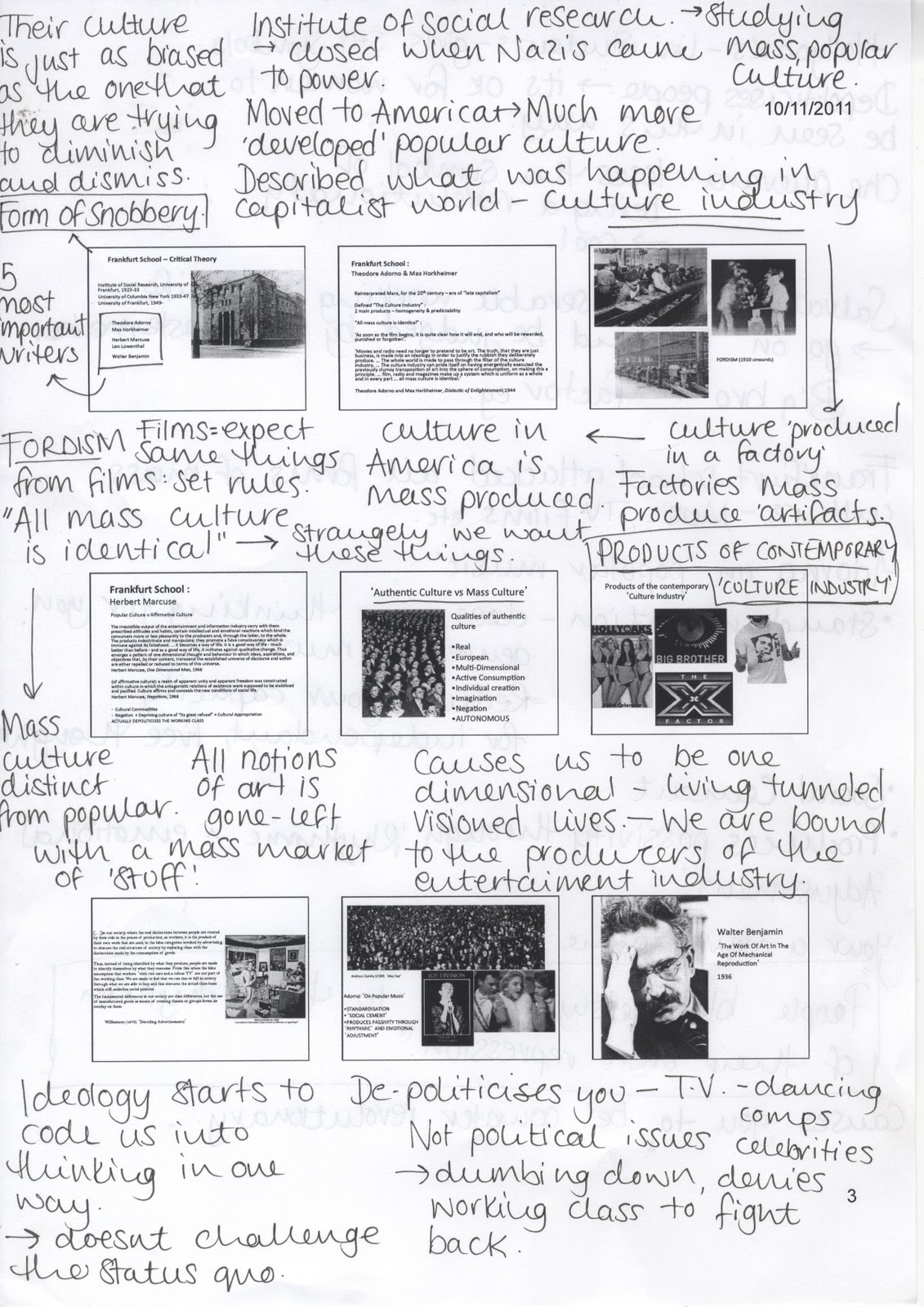
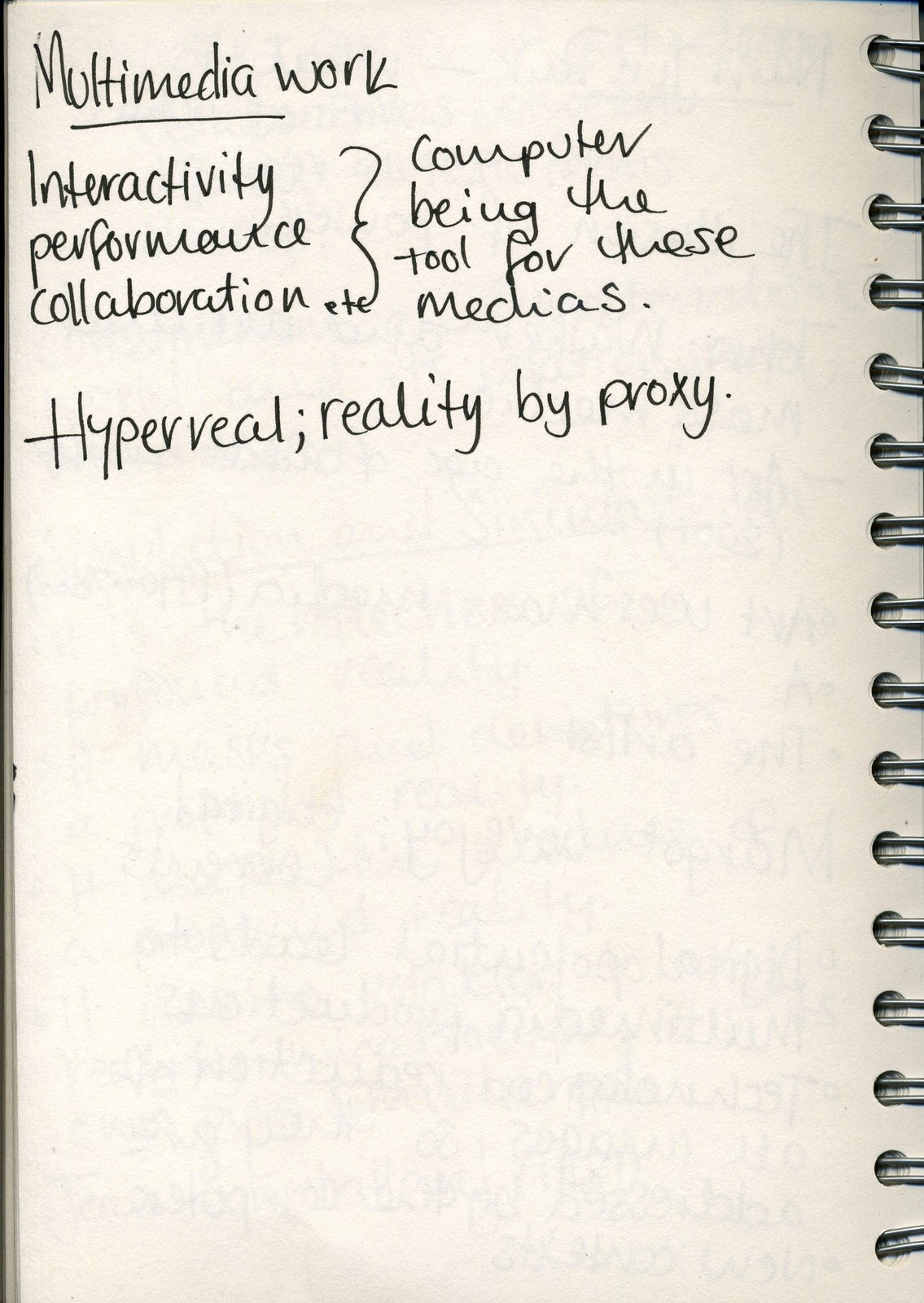
Wednesday, 14 March 2012

Essay


How are race and identity constructed and perceived in Benetton advertisements?


Benetton’s early advertising campaigns seem to follow the standard kinds of conventions used in traditional advertisements. The shift in advertising strategy between 1983 and 1991 on initial inspection uses racial harmony and ethnic diversity as its focal point. This is when the ads start to break the conventional codes of advertising by ignoring the visual representation of the product, and instead become engaged in the problems of racism. These campaigns were titled ‘Race’ and ‘Contrasts in Black an White’. They depict images of racial and ethnic difference, which caused a large amount of controversy. The switch in the ad campaign reflects Oliviero Toscanis attempt to transform Benetton’s brand identity. The change of emphasis from selling a product to focusing on cultural conflicts and social issues is seen to be an endeavor to redefine Benetton’s image to one of corporate responsibility. This controversial ad campaign blurs the boundaries between the image being viewed as a document and as an advertisement. ‘The ‘unity’ proposed by Benetton is intended as a good thing, but the existence of cultural groups for whom such unity is abhorrent generates alternative meanings’ (Barnard, 2005 p 91). It also arises the issues of commodity culture, using cultural difference to sell mundane products.

The main focus of Benetton’s ads of course was intended to be that of racial harmony and to communicate the idea of all people being members of the same family. This however was not the interpretation that everyone withdrew from the campaign. Bell Hooks for example took an entirely different meaning, viewing the campaign negatively. Supposedly ‘racially diverse images’ ‘exploit Otherness in order to increase product sales’ (Barnard, 2005 p 89). The ads have an underlying traditional function- brand recognition; the truth is cultural difference sells. Using the importance of the social situations to sell a product can be seen as exploitative. People react to this and give in to the product in order to make them feel they are doing something worthy or moral by choosing a brand that is socially aware. However the ads depict striking imagery, yet no text or further information highlighting the conflicts and issues shown. This shows how promotional culture is increasingly using different tactics to sell its corporate image as opposed to a product. It employs a postmodern strategy that reinvents the advertising style to sell to media saturated consumers. When looking at the campaign in more depth, it appears that Benetton take advantage of serious issues, employing the shock tactic in order to build brand recognition.

A number of authors have expressed varied views on how race is perceived in Benetton ads. Sturken and Cartwright, (2001), Alcoff, (2002) and Kellner, (1994) have all commented on how the media uses connotations of racial awareness in order to sell products. The portrayal of race gives the product an element of cultural sophistication. For instance Sturken and Cartwright in ‘Practices of Looking’ state how the ads are intended to signify racial harmony and ethnic diversity, however the message is often distorted depending on who is viewing it. For example, Benetton produced an advertisement displaying a black woman breastfeeding a white baby. This controversial image is open to a broad range of different perceptions; varying depending on which context it is viewed.

‘While in certain contexts, this image might connote racial harmony, in the United States it carried other connotations, most troubling the history of slavery in the United States and the use of black women slaves as “wet nurses” to breastfeed the white children of their owners.’ (Sturken and Cartwright, 2001 p 40)

Oliviero Toscani, Benetton Campaign, Autumn- Winter 1989

The obvious intention of this image is to communicate an inter-racial mother-child relationship, and draw attention to the issue of racism in attempt to signify racial unity as a positive thing. The media is an extremely influential outlet when tackling such issues. ‘Media images help shape our view of the world and our deepest values: what we consider good or bad, positive or negative, moral or evil.’ (Kellner, 1994) This advertisement in particular caused quite a stir. Despite Toscani's anti-racist intentions, the meaning becomes distorted and instead translates into one that is both offensive and highly controversial. ‘The image’s meanings are over determined by historical factors’ (Sturken and Cartwright, 2001 p 40) This is greatly due to the sensitivity of the subject, being seen in some people’s eyes to reinforce the racist and old-fashioned view of the black nanny. Another advertisement to be withdrawn in the United States was an image depicting two men handcuffed together, one white and one black. The close up framing that is also used in a number of other Benetton ads, can be seen to reflect the claustrophobic environment that people of different cultures, living different lifestyles are forced to endure. The problem perceived in this particular advertisement was that the black man was interpreted as a criminal and the white man as a police officer. The offense that these examples cause are conjured during the interpretation, the denotations of the images are simple and clear. Quite innocently one depicts a woman breastfeeding a child and the other, two men handcuffed together. The problem lies in the connotation of the images, which is the level at which the meaning is transformed. There is no physical suggestion in the second image that the black man is the criminal, but the cultural and social history of the individual viewing the ad determines what assumptions are made and what meaning is withdrawn. ‘To interpret images is to examine the assumptions that we and others bring to them, and to decode the visual language that they speak’ (Sturken and Cartwright, 2001 p 41). This view is deeply cynical in the way that it commercialises all aspects of life, even issues taken from the third world.


Oliviero Toscani, Benetton Campaign, Autumn- Winter 1989

Alcoff comments on the different ways in which the people perceive race, stating that the media (Benetton) creates a distinction between different races. This highlights the different meanings of race. ‘Its meanings have always been mediated through visual appearance, however complicated’ (Alcoff, 1996). Is race something purely physical that is something to be seen? If so then does it legitimise the act of identifying a person by the act of racial stereotyping? People are often identified and judged by the colour of their skin, colour being the easiest way to determine a person’s race. Visual conventions are the primary means in which people understand the world around them. ‘Rather than presenting the world icons represent it’ (Gilman, 1987) Race has no one meaning, but its meanings have always been interpreted through visual appearances.

By using models of different ethnicities in its ads, Benetton attempts to establish an idea of difference in order to distinguish its brand identity. Difference in this case is demonstrated through marking. ‘The unmarked category is the unquestioned norm and the marked category is the one seen as different or other.’ (Sturken and Cartwright, 2001 p 221).  This is to say that nonwhite models are immediately marked by their race, and the white models’ race is not acknowledged. It could be argued that Benetton uses models of mixed ethnicities in its ads in an attempt to unmark race, but in turn still creates a meaning of social awareness. Surely it is not possible to do both; by commenting on different races mixing together so obviously is to highlight it, making it seem like something out of the ordinary. The media constructs for the viewer a definition of what race is and what meaning the imagery of race carries. Ideas of race in media are constantly worked on and transformed, ‘It would be wrong and misleading to see the media as uniformly and conspiratorially harnessed to a single, racist conception of the world.’ (Hall, 1997).  This perhaps leads the viewer to inferential racism? A representation of events and situations relating to race leaves room for only propositions of unquestioned assumptions. In a sense this manipulates people into making racist assumptions.

Benetton ads play a key role in commodity culture, although very few of them show any sign of the product itself. In postmodern advertising, simply showing the product to the customer has become so lacking in originality it has become obvious and boring, so companies need to reinvent new and clever ways to stop “page traffic” in order to promote their brand. ‘Advertising functions in a much more indirect way to sell lifestyle and identification with brand names and corporate logos.’ (Sturken and Cartwright, 2001 p 198) Benetton advertisements gives the viewer a sense of being able to buy their way into multiculturalism, promoting diversity as being progressive and “hip”. This can be perceived as good thing, making people more aware of racial diversity and communicating it in a positive light. It can also however, be viewed negatively. The ads give the viewer a sense of “exoticism” making skin colour fashionable, as if it is possible to buy ones way into a different culture through commodities, giving them a sense of “otherness” and a feeling of belonging to an individual group. On the other hand, it provokes everyone to buy into the same thing, condoning conformist behaviour and erasing difference and individuality. ‘Ironically, while these products promise to white consumers the qualities of otherness, commodity culture is about the denial of difference, in that it encourages conformist behaviour through the act of consumption.’ (Sturken and Cartwright, 2001 p 221) It is arguable that this postmodern style of advertising and the use of important social issues to sell everyday products blur the boundaries between using imagery for documentary purposes and for advertising. This reworks the role of the advertisement and strips it of its potential to move us in a purposeful way. It removes the possibility of change, reducing the meaning and impact that the image could have on the viewer. Using race in such a way that it objectifies it, spawning colour prejudices. This poses the question ‘Does a political statement have any force when it is an integral part of an ad selling a product?’ (Sturken and Cartwright, 2001 p 276).

Benetton’s ‘Race’ and ‘Contrasts in Black and White’ advertising campaigns definitely communicate an element of cultural sophistication. While it is clear that their intent is to convey ethnic diversity and racial harmony, it still comes across as exploiting issues for the benefit of the brand. Although, as Lawrence Soley states ‘Advertising professionals are businessmen first and moralists second.’ (Soley, 1983 p 690) The ads tap into people’s emotions, making them feel that if they give in to the brand then they will somehow be contributing to or supporting racial togetherness. ‘Benetton is selling a celebration and erasure of difference and a kind of universal humanism.’ (Sturken and Cartwright, 2001 p 222). It is difficult to believe that Benetton’s intentions are entirely innocent; after all they are trying to sell a product so there is always going to be an element of self-gain. It is hardly arguable however, that Benetton bring light to a diverse range of racial and social issues. This can only be seen as a good thing, awareness is what drives change and eliminates prejudice. What does it matter if the alterior motive is to sell products to create profit, if it creates social awareness and influences the greater good? Any racist connotations withdrawn from these campaigns are merely a result of the assumption that social issues involving crime and turmoil are directed towards the ethnic minority. The intent of this campaign is to be controversial, but by no means racist. 


Bibliography

Sturken, M. and Cartwright, L. (2001) Practices of Looking, New York, Oxford University press

 Osborne, P. and Sandford, S. (eds) (2002) Philosophies of Race and Ethnicity, London, Continuum

Donald, J. and Rattansi, A. (eds) (2005) ‘Race’, Culture & Difference, London, Sage publications

Salvemini, L. (2002) United Colours, The Benetton Campaigns, London, Scriptum Editions

Dines, G. and Humez, J. (eds) (2003) Gender, Race, and Class in Media, London, Sage publications

Kellner, D. (2003) ‘Cultural Studies, Multiculturalism, and Media Culture’ in Dines, G. and Humez, J. (eds) Gender, Race, and Class in Media, London, Sage publications

Soley, L. (1983) ‘The Effects of Black Models on Magazine Ad Readership’ in Dines, G. and Humez, J. (eds) Gender, Race, and Class in Media, London, Sage publications

Hall, S. (1997) ‘The Whites of Their Eyes’ in Dines, G. and Humez, J. (eds) Gender, Race, and Class in Media, London, Sage publications

Alcoff, L. (1996)’Philosophy and Racial Identity’ in Osborne, P. and Sandford, S. (eds) Philosophies of Race and Ethnicity, London, Continuum


Barnard, M. (2005) Graphic Design as Communication, New York, Routledge


Wednesday, 29 February 2012

Task 5... The Gaze

‘according to usage and conventions which are at last being questioned but have by no means been overcome - men act and women appear. Men look at women. Women watch themselves being looked at’ (Berger 1972, 45, 47)

Discuss this quote with reference to one work of art and one work from the contemporary media.


The quote that is provided above by Berger is often misquoted, misinterpreted and misunderstood. The common misunderstanding is that women are being vain; however, what he is describing is the proliferation of women. 
Women cannot get away from the idea of being looked at, and there is almost a built in sense that they are always the subject of a males gaze.


In Hans Memling's 'Vanity' (1485) we are presented with naked female who is somewhat criticised by the title. It makes it seem as though it is the woman who is putting on the display, when in fact it is the painter and his portrayal of the woman who creates this connotation. The mirror that the woman is holding in the image is used as a device to make her appear vain. By appearing 'lost in thought' and distracted by her own beauty, the figure seems to be unaware of any other presence, thus allowing herself to be fully on display to the viewer.
In contrast to this is Manet's 'Olympia' (1863). The woman in this painting stares back at the viewer, partially covering herself, this suggests a challenging nature towards the male gaze.


A contemporary example of the male gaze in the media could be the Wonderbra campaigns of 1994, where once again we can see how "women watch themselves being looked at". The adverts feature Eva Herzigova, her image combined with the message being created through the advertisement, such as 'Hello Boys' communicates a sexual invitation, as well as the light and humorous nature created by the image. By looking down at her body and the effects of the Wonderbra the advertisement again creates a portrayal of vanity and sexual confidence towards the audience. By diverting her eyes down towards herself, it allows the viewer to once again look at the female subject without having their gaze challenged. Other slogans such as 'I can't cook, who cares?' create almost a derogatory idea similar to Memling's 'Vanity'; that women are vain in their own appearance and sexuality, when in fact, it is how they are being portrayed by the advertiser or painter.

Thursday, 23 February 2012

Task 4... Hyperreality

Write a short analysis (300 words approx) of an aspect of our culture that is in some way Hyperreal. Hyperreality is an awkward and slippery concept. Wikipedia defines it as follows-


Hyperreality is used in semiotics and postmodern philosophy to describe a hypothetical inability of consciousness to distinguish reality from a simulation of reality, especially in technologically advanced post-modern societies. Hyperreality is a way of characterizing what our consciousness defines as "real" in a world where a multitude of media can radically shape and filter an original event or experience. 


One example of hyperreality in our culture is the zoo. You go to the zoo to view animals in what appears to be their natural habitat, but in actual fact it is not a faithful representation of their natural life.
Baudrillard speaks of the un-reality masking the reality. The zoo is a good example of this, the truth is disguised by a false representation of reality, distorting our understanding of it. The zoo also brings all different parts of the world together, merging different habitats of these animals into one space, this would never happen in reality, making the zoo hyperreal.
Where hyperreality is demonstrated reality is replaced by simulacrum. Simulacra is a copy of something that is there to stand in for or replace what is real. Simulacra makes it difficult to differentiate from the copy and the original. Most people won't ever get the chance in their lives to experience what these animals' lives are actually like in the wild, so the zoos copy of this becomes a reality to them, making the zoo itself a simulacrum. 
'It is the generation by models of a real without origins or reality: a hyperreal' (Baudrillard), This quote from Baudrillard can be seen to describe the zoo. Everything that is presented to the public is a representation or a model of what is real, except it is made more accessible and more practical for the public to view. It is then that the boundaries between the real and the hyperreal become blurred. When the copy becomes more known and recognised than the original, people start to believe the copy to be the reality and it becomes hyperreal. 

Andy Broadey- The Production and Critique of institutions

To examine the historical development of practices of institutional critique in relation to the corresponding development of the modern art gallery.

-To demonstrate the importance of the art museum to the rise of the bourgeois public sphere in the 19th century.
-To analyses Peter Burger's theorisation of the twin development of aestheticist (formalist) art practice, and critical avant-gardism in the first three decades of the 20th century.
-To consider the postwar critique of the convention of the white cube through attention to Brian O'Doherty's Inside the White Cube, and Michael Asher's 1974 Claire Copley Gallery installation.

Thursday, 9 February 2012

Deleuze and Guattari and Creativity

To examine how Deleuze and Guattari draw emphasis to the constructed and contingent nature of social reality.


  • To contrst their model of creatove, 'rhizomatic' thought with traditional 'tree-like' models of thought based in sequential argumentation;
  • To examine Deleuze an Guattari's interpretations of precesses of social change and development;
  • To consider how they propose individual people might transform themselves;
  • To contextualise these theories of change and development in relation to the concepts 'the virtual' and 'the actual'.
A philosopher and a psychiatrist. Theories of music, geography and sociology. 

Student an worker protests, Paris. The role of the activist- A thousand plateaus (book)

Rethinking social change- change can be on-going. People felt society was going to change.

Tree. Revolt against traditional modes of thought- tree like structure. The trunk being the central thesis and the branches being all individual after thoughts.

Alternative structure of thought- play and creativity. Rhizomatic thought. The virtual and the actual. The chapters don't build on one another and come together- you should dip into one chapter, then another- building a thought.

Rhizo grows underground and pushes up shoots.

Monday, 6 February 2012

Jean Baudrillard and Hyperreality

Plato's allegory of the cave- metaphor for society.

Plato (classical Greek philosopher)

Prisoners- bottom of the cave. Children born into to same life. The cave is really dark, only shadows can be seen that are cast by sunlight seeping through and fire that keeps the cave warm. Prisoners take the shadows (are cast by the cave masters, accidentally or on purpose) to be the real world, that is what the real world is like because they don't know any different.

This reflects the media. Theres the real world, and the image world- what we take as reality.

How commodity culture and the mechanisms that surround it and capitalism create alternative realities, which make reality impossible to access. They disguise the true meaning of the world and distort our understanding of it.

Coca Cola, 1930s campaign. -turned father christmas into red and white, and western. Coca Colas copy of one of the stories of santa claus has become reality. Their is such a long line of copies and repetitions that it is hard to find the original. Baudrillard tries to get back to the origin or the real of the copy.

Study of soft drinks- Samuel McClure and Read Montague.

The unreal having an effect on the real- the image world changing the real world, even tastes and smells.
Emeerged during post-structuralism. Alongside Gilles Deleuze Roland Barthes, and more writers...

Guy Debord- theory of the spectacle. Similar to theory of hyperreality.
A society that lives around a spectacular image of life rather than a real image of life.

Karl Marx argued that commodity has a use value and an exchange value. Baudrillard argued that commodity has a use value and an exchange value, but also between the two has a sign value.

Sign value- all the various things that something connotes. How commodities make us look.

Increasingly in consumerist society advertisers try and ad sign value to objects. Sign value isn't real. A society that is more reliant on the image of things rather than the reality of things.

Simulacra and simulation (1981)

Simulacra- a copy of something that is meant to stand in or replace something. Coca cola stands in for the father christmas myth, replaces it. The simulacra makes it difficult to differentiate from the copy and the original.

When simulacra is copied to simulacra, to simulacra it is hyperreal. The copy is not produced from something real anymore. Copies are copied from copies. Reality is produced from simulacra.

Walt Disney, when doing the drawings for sleeping beauty's castle (logo) from a castle in Prague. I real place, made drawings of this (simulacra). In Disneyland, an actual built version (hyperreal). People visit the castle because it was the inspiration for Disney. The copy is influencing the real world, something that is thousands of years old is visited due to a copy that is much younger.

German christmas markets in England. Light hearted version of Frankfurt, a bit sillier, cliches- a simulacra of the original. They get more popular and spread, copies are made. Birmingham market is three times the size of the one in Frankfurt. The original is lost, turns into an English Christmas tradition. We think we know what a German market is like, but in fact the reality is lost. It is impossible to access the origin and reality of things.

New York city. Is the Manhattan skyline only romantic because we see that it is in films? The feeling of romance is hyperreality. All films are simulacra- copies of what is real.

Ribena. Artificial flavour that we have excepted as blackcurrant when in fact it tastes nothing like it.

We'd rather stare at the wall of Plato's cave rather than face reality. It's depressing.

The Gaze


'Men act and women appear. Men look at women. Women watch themselves being looked at' (Berger 1972)

Our society is one giant panopticon around women. Women are there for aesthetic value and men cause change in the world.

Hans Memling- 'Vanity' (1485)

Our gaze is never challenged, so we are allowed to look without anyone ever knowing that you are looking.
When the gaze is not returned it allows the person to be objectified.
All art at this time was made by men. Men also only bought art. Art and visual culture is and always has been dominated by men.

The gaze is about power- a male fantasy of domination over women. A reminder to men that they should be dominating. A fiction, a fantasy- not fact.

Alexandre Cabanel 'Birth of Venus' 1863

Manet 'Olympia' 1863

Birth of Venus doesnt return the gaze, but in a flirty way. Olympia returns the gaze, but in a challenging way. In a dominant position, more guarded body language.
Olympia is reality, she is a prostitute. Birth of Venus is considered art. Being forced to confront that the Birth of Venus image of a woman doesn't exist, you have to pay for it and you will always be challenged. Being confronted with the reality of sexual relationships.

Pornography is not just about sex, its about male dominance. Women are always submissive. The viewer being in control.

Marxist analysis- Men run society and superstructural forms will reflect that and legitimise it.

These images allow more images to be created- they lead to things like wonderbra, women in modern advertising.

Society is a giant panopticon- constant reminders that you have to dress, act, look a certain way- the gaze of an entire culture onto you as an individual woman.


Thursday, 2 February 2012

Essay Proposal


How are race and identity constructed and perceived in Benetton advertisements?

  • In this essay I am going to address how race and identity are communicated in the media, using Benetton advertisements in particular as a case study
  • I will address particular advertisements made by Benetton and talk about how the viewer receives the image and what Benetton meant to achieve by displaying ethic diversity in their ads.
  • I am going to address how using race as a focal point in their advertisements arises the issues of commodity culture, using race to sell mundane products.
  • I am going to discuss different opinions on the add, whether they should be seen in a positive or negative light.
  • I will briefly touch on race and ethnicity in the media in a broader sense and how it reflects on Benetton.
  • I am going to research into various different theorists that discuss race and ethnicity used in the media and compare their views to come to a conclusion.


Sturken, M. and Cartwright, L. (2001) Practices of Looking, New York, Oxford University press

Osborne, P. and Sandford, S. (eds) (2002) Philosophies of Race and Ethnicity,London, Continuum

Donald, J. and Rattansi, A. (eds) (2005) ‘Race’, Culture & Difference, London, Sage publications

Salvemini, L. (2002) United Colours, The Benetton Campaigns, London, Scriptum Editions

Alcoff, L. (1996)’Philosophy and Racial Identity’ in Osborne, P. and Sandford, S. (eds)Philosophies of Race and Ethnicity, London, Continuum

Friday, 27 January 2012

Jean Baudrillard and Postmodernism

Jean Baudrillard's theory of hyperreality.

To foreground Baudrillard's position, by how it develops out of a Marxist critique of Capitalism;
To examine how Baudrillard's analysis of advertising led him to argue that consumer's engagements with commodities had begun to function with language.


Thursday, 19 January 2012

Identity

Historical concepts of identity
Foucault's 'discourse' methodology
Zygmunt Bauman
Identity today in the digital domain

Theories of identity


ESSENTIALISM- our biological make-up, what makes us who we are. We all have an inner essence that makes us what we are.
POST MODERN THEORISTS DISAGREE

Physiognomy
Phrenology
Cesare Lombroso (1835- 1909)- founder of positivist criminology.
Different parts of the brain formulate the way you are- if you have a large part of the brain the other part will be lacking, giving you an unbalanced personality
Criminal tendencies are inherited.
Legitimises racism?

DOMESTIC
ASPIRING
SELF PERFECTING
MORAL
REFLECTIVE
PERCEPTIVES
ANIMAL

Physiognomy legitimising racism


Suggests English, German are superior. Nazism.

Hieronymous Bosch- Christ carrying the cross. 1515


Chris Ofili- Holy Virgin Mary. 1996
As a black woman, exaggerates African features. Caused an uproar at the thought that the virgin Mary was black.

Historical phases of identity


Pre modern identity- Personal identity is stable, defined by long standing roles- what your father did?
Modern identity- Modern societies begin to offer a wider range of social roles. Possible to start choosing your identity- people start worrying abot self identity
Post-modern identity- Accepts a fragmented self.

Pre-Modern Identity


Institutions determined identity. Patriarchal, marriage, the church, monarchy, government.

'secure identities'

Farm-worker
soldier
factory worker
housewife
gentlemen
wife-husband

19th and early 20th centuries

Charles Baudelaire- The painter of modern life
Thorstein Veblen- Theory of the leisure class
Georg Simmel- The metropolis and mental life

Baudelaire introduces the concept of the flaneur-gentleman stroller- leaves no room for women, only men.
Veblen 'conspicuous consumption of valuable goods is a means of reputability to the gentlemen of leisure.
Simmel- 'trickle down theory' What the fashion system today is based around. Walking around Paris looking good- showing something to aspire to, what differentiates them from the rest of society. The lower classes try to emulate what the higher classes are wearing.
Fashion cycle of new seasons- working class try to copy, higher class don't want to be related to lower classes.

Edvard Munch, Evening on Karl Johan, 1892

Simmel suggests that because how quickly things change people become less concerned about whats going on around them and more concerned with themselves.

Discourse analysis

Class
Nationality
Race/ ethnicity, gender and sexuality- otherness

Class, people move to cities and start working in factories, emergence of working class. You have to be aware of other classes to realise your own. If you are in the upper class, you want to maintain it.

Humphrey Spender/ Mass Observation, Worktown project, 1937

Idea of social inequalities at work.
Image of people at the theatre, suggests working class are uncultured- only five people of the industrial north go to the theatre.

Martin Parr, New Brighton, Merseyside, from the last resort. 1983-86

Documents lives as he sees it. Romanticises life. Looking down on other peoples lives?  Condescending nature.

Martin Parr, Ascot, 2003

Trying to fit into a class you don't belong. People wearing things they think are glamorous. Roles they don't belong to.

Martin Parr, Sedlescomebe, Think of Ebgland, 2000-2003
Martin PArr, Think of Germany

Notions of nationality- alexander McQueen- Highland Rape collection. autumn/ winter 1995/-6

Rape of Scotland by the English. Is this is an odd way to make a statement about national identity.

Vivienne Westwood. Anglomania collection, autumn/ winter 1993- 4
About Englishness- using tartan- taunt at the Scottish. Insulting to use it as a symbol of Englishness.

Las Vegas- New York, Paris, Egypt- all these identities in one place. Why would you need to go anywhere if all these identities have been contained in one place?

Race/Ethnicity

Chris Ofili, No woman no cry 1998

Black teenager- Steven Lawrence killed, got off on a loop hole in the law. Victims face in the tears.

Captain Shit and the legend of the Black Stars, 1994

No black superheroes. What would they be called, how would they be perceived by a largely white audience.

'Shithead'

Is he devaluating his own identity instead of making a statement?

Gillian Wearing, Signs that say what you want the to say and not say what someone else wants you to say 1992- 3

Alexander McQueen, its a jungle out there, autumn/ winter 1997-8
Commenting that there isn't much room for black models in fashion.

Gender/ Sexuality


The fashion industry is not the work of women, but of men.
Secret hatred of women by forcing them into exaggerated, ridiculous, hideous clothes.
Mass assumption that male fashion designers are homosexuals and have a secret hatred for women.

Masquerade and the mask of femininity.
Cindy Sherman, untitled film stills, 1977-80
Scenarios that women get put in in film. Women are in film just to look beautiful and be objectified by men.

Women have to differentiate themselves as female artists and create art that comments on gender.
If your a female artist and your photographing a woman are you objectifying women just like men? Most female artists photograph themselves.

Is it more acceptable because a woman has created it?

Wonderbra- domeaning to women or empowering to women? Societies view of what a beautiful woman is.

The postmodern condition: Liquid modernity and liquid lov.

Identity is constructed through your social experience.
Erving Goffman- saw life as 'theatre'.

Zygmunt Bauman Identity is revealed to us identity is something to be inverted not changed.

Introspection, people scan their phones to check that they still exist, that someone cares.

Postmodern identity: I think therefore I am.

Barbara Kruger, I shop therefore I am, 1987- defining yourself by what buy or own.

Online adultery and cyberspace sex: BBC 2 documentary.


Wednesday, 18 January 2012

Task 2... Benjamin and Mechanical Reproduction

Read the Walter Benjamin's essay 'The Work of Art in the Age of Mechanical Reproduction'. Write a 300 word analysis of one work of Graphic Design, that you think relates to the themes of the text, and employing quotes, concepts and terminology from the text.


Walter Benjamin's essay 'The Work of Art in the Age of Mechanical Reproduction' discusses the change that is impacted by the progression of technology and how it enables us to reproduce art. New technologies allow for mass production and widespread distribution of artworks, changing the traditional values that art once held. As technology progresses the copy gets more and more power over the original, causing it to lose value. The copy doesn't physically touch the original, but it makes it less special and depreciates it. 
The elite society once drove the interpretation of artworks produced, but as technology progressed and allowed these artworks to be cheaply reproduced, they became readily available to people of other classes, allowing members of the public to draw their own interpretations. 
The fact that we can all have the technology to reproduce works of art means that we can all have our own, redefining the meaning of it. Mass production allows us to redefine culture against how taste makers say it should be, allowing normal members of the public, of all classes to define their own meaning of the piece. What you do with art also changes the meaning, which challenges authority and the idea of one work having one meaning. 'In permitting the reproduction to meet the beholder or listener in his own particular situation, it reactivates the object reproduced'.


An example of graphic design thats meaning is changed by mechanical reproduction is the 'Keep Calm and Carry On' poster. The poster design was originally produced by the minority to control the majority, however they are now reproduced by the minority. People of all classes reproduce this poster and the original meaning gets lost. The mocking nature of these reproductions devalue the original and takes away the authority it once held. Most people that own or have seen the copies of the 'Keep Calm and Carry On' posters will not even know the true meaning of the original, having it only for aesthetic or commodity value, thus completely changing its meaning from the original. The reproduction and modification of this piece of graphic design makes it readily available to the masses in present day, thus taking away its 'it's presence in time and space' and in turn makes it lose all meaning.

Friday, 13 January 2012

Task 1... Panopticism

Choose an example of one aspect of contemporary culture that is, in your opinion, panoptic. Write an explanation of this, in approximately 200-300 words, employing key Foucauldian language, such as 'Docile Bodies' or 'self-regulation, and using not less than 5 quotes from the text 'Panopticism' in Thomas, J. (2000) 'Reading Images', NY, Palgrave McMillan.


An example of panopticism in contemporary culture could be reality television; a good example of this is Big Brother. Cameras constantly monitor the subjects inside the Big Brother house, and they have the knowledge that they have the entire nation watching their every move. This is of course going to effect the way they act. The cameras are placed, and visible all over the Big Brother house, an ‘omnipresent and omniscient power’, and serving as a reminder that the contestants are always being watched. The fact that they are being surveyed is not hidden, and even the Big Brother voice serves as a reminder that there is an upper power and governing body, controlling what they do and watching their every move. Both this voice and the cameras are 'representatives of power'.
The power that is imposed by the Big Brother body makes the housemates change how they behave and make them become 'docile bodies' who are 'self monitoring' and 'self correcting' their very actions and behaviour. The housemates are not necessarily aware that they altar their behaviour for the audience viewing, but do it on a subconscious level, acting in a way that they want to be perceived by other people. The knowledge that they are being monitored by cameras, and that there is an audience act as an ‘automatic functioning of power’. They feel that they are always on show and exposed to the outside world, creating a 'state of constant and permanent visibility', which will inevitably change their behaviour patterns and feel the effects of the Panopticon.

Thursday, 1 December 2011

Cities and Film


  • The city  Modernism
  • The possibility of an urban sociology
  • The city as a private space 
  • The city in post modernism
Georg Simmel

German sociologist- Told to lecture on the role of the social life in the city, but instead reverses idea and comments on the impact the city has on the individual.

Urban sociology. How the individual can exist in a space that is built on a group contribution. 
Engulfing the human figure, being swallowed up.

Architect Louis Sullivan- Creator of the modern sky scraper, form follows function. 

Guaranty building. Influenced by the arts and crafts movement- outside very ornate. The inside is very tightly organised. Basement mechanical zone, ground floor public zone, third zone office and fourth elevator equipment and small offices.

Skyscrapers represent the upward movement of business opportunity in New York.

Manhatta  Paul Strand an Charles Scheeler (1921)
Explore the relationship between camera movement and film. The figurine city, a small cog in a larger machine. 
Charles Scheeler photography- The city being a tall mechanical presence. Industrial landscape.

Fordism: mechanised labour relations. Maximum productivity in a minimal effort. Spew out standardised low cost goods. 

Modern times Charlie Chaplin (1936)
The body being consumed by the factory environment.

Stock market crash of 1929. Factories close and unemployment goes up dramatically. Those in factories mostly effected. 

Man with a movie camera (1929)
Silent movie. Famous for its range of cinematic techniques, split screens, close ups, stills, double exposure etc. Was invented within this film. 

Flaneur
Means a stroller, longer, saunter or loafer. Charles Baudelaire describes the role of the body in the city. A person who walks the city to experience it. He is just there to observe other people actions and interactions. Walter Benjamin adopts the concept of the urban observer as an analytical tool and as a lifestyle as seen in his writings. 

Photographer as flaneur. The flaneur finds the world picturesque. The female version- flaneuse. In the time that the idea of the flaneur was emerging women were not seen alone on the street. What we think of women on the street- either a bad woman or a prostitute.

Arbus/Hopper
A woman sitting alone in a cafe. A threat? The darkness that surrounds it has a depth to it, almost like the night is clinging to her. 

Sophie Calle (1980)
Creates a photographic piece of work about the flaneurs relationship with the city (Venice). Follows people without them knowing, documenting their journey. Somewhere between stalking and a love affair.
Venice- city of a labyrinth of narrow streets- you always end up where you began. 
The detective (1980) 
She gets her mother to hire a detective to follow her. Photographic document of her existence. Set in Paris. Ultimately controlled by her- she leads him around the city.

Cindy Sherman untitled film stills (1977-80)
Stereotypical view of the woman in the city. Low angle film points, skyscrapers behind characters- being swallowed up and overshadowed by the city.

Weegee (Arthur Felig)
See the dark side of New York. Follows around the emergency services, documenting them. Instantaneous reporting- kept  a portable dark room in his car s he could develop them quickly and go straight to the press.

The Naked City (1948)

LA Noir (2011)- video game. Challenges the player to control the LA police department. The city as simultaneously in the past and the present.
Bladerunner- made in 1982 depicting the city in 2019.

Walker Evans Many are called (1938)
Uses a hidden a camera, takes unobserved photographs. Intensely private moments. The idea of people being alone and separate in the city, despite being surrounded.

Post modern city on photography. Joel Meyerowitz.

9/11 citizen journalism. The end of the flaneur? Impossible to be a detached observer. The destruction of hte twin towers is the destruction of the American dream.
Adam Beezer 2001. Mobile phone images, replaces the idea of a journalist being sent to the scene- citizen journalism.
Surveillance city. Coming together of photography, film and the street.

Monday, 28 March 2011

Essay, re referenced.


‘Advertising doesn’t’t sell things; all advertising does is change the way people think or feel’ (Jeremy Bullmore). Evaluate this statement with reference to selected critical theories.

It is hardly arguable that advertising is one of the most influential design medias in the western world; we are constantly bombarded by images promising our fantasies of a better life. We see an ideal of ourselves presented to us by the media and advertising, which demands we buy something to gain status in society; we react by thinking if we buy the product it will become a reality. It seeks to make people unhappy with their current possessions, and manipulates them into believing that the product makes the person, as Judith William states “Instead of being identified by what they produce, people are made to identify themselves because of what they consume” (Williamson, 1978). Consumption becomes an addiction and we find ourselves subconsciously following a false need, always having to have the latest, ‘newest’ product on the market. Commodities can also be seen as a shortcut to knowing who people are, we artificially feel closer to some people and further away from others because of their clothes and possessions. We conduct our relationships through objects or products and use them to ‘relate’ to other people, this dehumanizes society and makes material possessions more important than the actual person.

“In our urban world, in the streets where we walk and the buses we take and the magazines we read, on walls, on screens. We are surrounded by images of an alternative way of life.” (Berger, 1972) Whether consciously or not we take in these images that we are bombarded with in our everyday lives, promising us a brighter future. They demean our way of living, glamorizing products and consumerism. These images persuade us to buy something in a bid to make our lives in some way better, promising us happiness and wealth, although in doing so we’ll be poorer for having spent our money on otherwise worthless products. They show us people who have been transformed by these products, evoking in us envy, “This state of being envied is what constitutes glamour.” (Berger, 1972) We see our ideal selves in these images presented in the media and are envious of the fact, leading us to believe that if we buy the product it will make our ideals a reality.
“Oil paintings were surrounded by gold frames which symbolize the wealth of the owner within the picture and around it, what surrounds the publicity image is us, as we are.” (Berger, 1972) In the past people have used art and culture to show off status, now we use commodities. These advertisements, thrown out into the middle of our world, exclude us and leave much more to be desired. They belittle our lives as we know them and present to us our supposed ‘needs’ evoking in us a sense of longing for something better than the bleak world we live in.

“Products are shown in a favorable context, they encourage the viewer to associate their product with pleasant scenes, likeable characters. Romance, glamour and fun.” (Jacobson, 2006) Image and ideology are inherent factors in contemporary advertising, and when products are more subtly introduced to us, imbedded in motion pictures we are unaware of the impact they have on a subconscious level. Film audiences are easily definable when it comes to considering target market groups. Predominantly the age range of film goers tend to be from 15 to 34. Product placement in films also offers an outlet for products that are banned or discouraged from other, more conventional ways of advertising; such products include cigarettes and alcohol.
Imbedded advertising in film is often very subtle and few viewers are even aware that it exists. As Jacobson and Mazur state, “Imagine the impact of your customers seeing their favorite star using your product in a feature film. Both YOUR COMPANY’S NAME AND PRODUCT thereby become an integral part of the show, conveying both subliminal messages and implied endorsements.” (Jacobson, 2006) Films depict to us visions and variations of social realities; they are an apparatus for our own representations. This leaves us to interpret these ideologies as our own and subconsciously link them to products imbedded within these images.

The advertisement industry is also hugely influential towards children, sending them messages that they do not necessarily understand. “Research suggests that children under age 7 or 8 generally do not realize that ads are intended to persuade them to buy something. Younger children tend to think of ads as informal rather than persuasive.” (Alexander and Hoerrner, 2006)
Children are bombarded and overwhelmed by advertising messages from a young age. Very young children do not differentiate between program content and advertisements, finding it harder to distinguish between what is fact and what is being persuasive. They do not understand the distinctions between the real world and the ideal world being presented and cannot recognize deceptive and manipulative images, finding it hard to tell the difference between fantasy and reality. Another concern about advertisements aimed directly towards children, is the effect they have on their views towards commodities and material possessions. The American Psychological Association states that children are increasingly learning to be more materialistic and associate their self worth by what they own. “They are what they buy.” (Kunkel, 2002).


'The Uncle Sam Range' (1876) advertising image by Shumacher &Ettlinger, New York

This advertisement for ‘The Uncle Sam Range’ is an example of how imagery and subtle connotations are used to evoke people’s emotions and ‘need’ for something better. This image uses obvious symbols and stereotypes to brag of America’s greatness, which undermines other nations and makes them look primitive in comparison. It taps into people’s pride and longing to be the best, and to have the best. Every aspect of the image hints at America’s superiority over other nations. The entire set out of the image shows a typical ‘perfect’ family, as if by buying the range you are also buying the American dream. It is of course ridiculous to think that an oven can change your life, and make you some way superior to other people, or nations. But we buy into this thought; we buy into the thought of having something better. This not only undermines other nations, but it undermines everyone who views it, saying that there is always something more to be desired, this is what you want and how you want to be seen. “Advertisements are selling us something else besides consumer goods: in providing us with a structure in which we, and those goods, are interchangeable, they are selling us ourselves.”(Williamson, 1978) This quote speaks of how we do not buy the material product, but the idea of the product, the idea of it making us something more.


Victor Burgin’s Possession (1976)

This next image by Victor Burgin communicates a clear message, “7% of our population own 84% of our wealth”. Advertisements feed on this fact, and feed on capitalism. We buy things to make us feel richer, but in turn we are making ourselves poorer and them richer by spending money. Publicity persuades us that by buying something or having a certain product it will make us feel in some way wealthier and in turn make us feel happier. This makes people buy things that they do not necessarily need or want, giving us a superficial status and self-identity by the things we own. We use these possessions to express an idea that we have of ourselves, or how we want other people to see us, this arouses the question do we get to know people for whom they are or by our material possessions?

It seems that the advertising industry feeds solely on exploiting our emotions and uses this as a tool to get us to buy into whatever they may be selling. Although I have brought up many negative views and points about how we react to advertising and the media around us, it does benefit the economy by encouraging business and growth, although the majority of the wealth may be going to a small percentage of the world. Despite this I cannot help but feel that the advertising industry does nothing but tap into our insecurities, making us believe that possessions can actually change the way we feel and how happy we are with our lives. It brags of the virtues of commodities and demands we buy something to gain status in society, making us live in an ever-growing materialistic world. “We obviously do need these material goods. Advertising gives those goods a social meaning so that two needs are crossed, and neither is adequately fulfilled.” (Williamson, 1978) It appears that we are in a vicious circle between our need and want for material possessions.

Bibliography

Berger, J., 1972. Ways of seeing. London: Penguin.


Frith, K.T. ed., 1997. Undressing the Ad: Reading Culture in Advertising. New York: Peter Lang.


Pardun, C.J. ed., 2009. Advertising and Society: Controversies and Consequences. West Sussex: Blackwell.


Williamson, J., 1978. Decoding Advertisements: Ideology and Meaning in Advertising. London: Marion Boyars.


Theorists


Judith Williamson
John Berger
Michael F. Jacobson
A. Alexander & Keisha L. Hoerrner
Dennis Kunkel

Monday, 21 March 2011

Graphic Design & Deconstruction

 'Text from Lupton, E (2008) 'Thinking with Type'


  • Typography helps the reader to navigate their way around a piece of text, it helps them to avoid reading by skimming the text and skipping to the information that they are looking for.
  • Before print text was handwritten which meant that there were errors. Print meant that the text was finished and was unable to be edited by the reader; it meant the closure of the work making it a finished product. However online texts are downloadable, meaning the reader can now edit it, resulting in the typographer losing power over how the text is interpreted.
  • Language, when it is spoken has a continuous flow with no audible gaps. In type spacing and punctuation is crucial to translate speech.
  • Typography, acting as 'the crystal goblet' assumes the content of the text itself and changes it with each act of representation, being a mode of interpretation having huge power over the text. This means that how the text is used and presented is more important than what it means.
  • 'We may play the text, but it is also playing us'- meaning that however we try and interpret the text, type and layout plays a massive role in how it is read.
  • Typography, when made evident and ignoring the rules of 'the crystal goblet' illuminates the construction and identity of a page. When you can consciously see the rules and conventions of typography being broken it makes the reader realise the importance of them, and how much they influence the way we perceive a piece of text.
  • Text on screen has allowed typography to rise up out of the ashes. Computer display is more hospitable to text than film or television because of its physical proximity user control. Screen based text allows the reader to jump to other pages through links, skimming through information quickly and to download text, making it possible for them to edit it themselves.

These images by David Carson are key examples of deconstructionist graphic design. In the first image different fonts are used, even within one single header and the text is fragmented and seems to be thrown carelessly across the page. This makes it harder to read and takes more time to interpret what the text says. I think that there are two reactions when viewing a piece of graphic design like this, you either embrace it or dismiss it. Either way it is powerful in the way that it brings to light how the rules and conventions of typography influence how we read a spread. Although it is hard to read and may take some time, it is legible, so it doesn't necessarily make it 'bad' graphic design.
I particularly like the quote in the second image, 'Don't mistake legibility for communication'.This quote is emphasised by the scattered type surrounding it, which is ultimately illegible. What I think Carson is trying to communicate with this image is that just because text is legible or readable in the typical sense, doesn't mean that it is communicating to the reader in its full power. It is easy to block text off, following typical rules of layout, but is it communicating to the reader in its full potential, or just manipulating them to perceive the text in a certain way?